Unipolarity’s Shield:  Two Criminal Heads of State Hold the World Hostage

AN OPINION EDITORIAL BY CYNTHIA MCKINNEY, PHD

It is February 28, 2026 and the unthinkable has just been unleashed on the Islamic Republic of Iran.  Bombs are falling and missiles are being launched.  Innocent people are dying.  And two rogue states are at it again:  Lebanon, Libya, Syria, Iraq, Somalia, Sudan, Afghanistan, Yemen, and now Iran, the latest in a long chain, are their victims.  I’m talking about the United States (U.S.) and Israel.  Between them, these two states have not only dropped more bombs on their targets than any other state, but the U.S. has also actually used its array of A,B,C weapons:  atomic (against Japan in World War II), biological (against Korea and China in the Korean War, and against Cuba in the U.S. war against Castro’s Cuba) and chemical (against Vietnam, Iraq, and Yemen).  While this unipolar moment, Pax Americana, was supposed to bring peace and democracy and freedom and liberty to the world, instead it has brought constant war and today, the threat of another global conflagration.  And just as these two states have found each other in their global criminal enterprise, so, too, is the case with their leaders, having been found guilty of crimes by their local courts.  How does this happen and how can these two hold the world hostage for World War III?  That is the source of my confoundment today.

*Netanyahu’s guilty verdict is pending completion of his trials once Israel is no longer at war . . .

Unipolarity and What it Means Today

After World War II, the United States was the most powerful state on the planet with its economic and industrial might and its technologically superior military with global reach.  Rather than use this dominant positioning to promote peace, the U.S. used it to enforce a universal culture in every corner of the world, even to countries that didn’t want it.  Economically, the world became a colony of the U.S. and the military was its enforcement wing, used against any and every state that sought to prioritize its sovereignty.  The one President who spoke out about the world not needing a Pax Americana was murdered in broad, open daylight—sending a powerful message to those who succeeded him.  Thus, every U.S. President since John F. Kennedy, with the sole exception of President Jimmy Carter, has bombed another state during his tenure.  That demonstrates that unipolarity can and has become a structural nightmare: a system exactly the opposite of that enshrined in the U.S. Constitution:  one of checks and balances and dispersed—not concentrated—power.  Unipolarity is a global order that has  no effective check on the power of its leader, even when that leader is a convicted felon.  Even worse, unipolarity extends its protective shield to the hegemon’s primary ally, in this case Israel, allowing Israel to operate with the same impunity as the U.S.  By removing all external constraints on the superpower and its inner circle, unipolarity does not prevent world war; it actively enables the very leaders most desperate to start one.  Today, this means that Donald Trump and Benjamin Netanyahu own the world with no effective constraints on their power or their use of force.

Two Criminal Profiles, One Shared Logic

Donald Trump was convicted in May 2024 on 34 felony counts of falsifying business records—a domestic criminal conviction that, in many other countries, would have disqualified him from office.  But the U.S. Constitution does not bar felons from the presidency, and no international body can overrule that.  By 2026, Trump had returned to the White House as the first convicted felon to serve as U.S. president.  His personal desperation—the threat of prison, the humiliation of conviction, the fear of what comes after when there is no sovereign immunity—drove Trump even closer to his donors who wanted an Israel-first foreign policy and that then became a driver of U.S. military policy.  Trump’s situation is compounded by his complicity in the crimes of convicted pedophile Jeffrey Epstein, whose criminal empire extended even to Mar-a-Lago, Trump’s Florida home.  Therefore, Trump is both pushed by his donors who want to protect Israel from its neighbors at all costs and pulled by his fear of Epstein’s shadow, always lurking behind every stage.

Benjamin Netanyahu has been on trial since 2020 for corruption.  Israeli courts have not yet reached a verdict, but the threat of conviction hangs over him.  He has repeatedly used wartime emergencies to delay legal proceedings, weaken judicial oversight, and argue that “you cannot judge a prime minister in the middle of seven wars.”  Unipolarity makes this strategy viable because Donald Trump, and almost any U.S. President, will veto any international condemnation and shield Israel from consequences; Netanyahu faces no pressure from the world’s hegemon to de‑escalate.  No other external forces can stop can stop him.  His domestic legal jeopardy and his aggressive foreign policy are two sides of the same coin.

Therefore, in today’s unipolar world, U.S. President Donald Trump could stop Netanyahu, but his own problems force him to shield a sitting prime minister, Benjamin Netanyahu, on trial for corruption while he escalates toward regional war.  Donald Trump, with his own problems, attacks Iran, strategic partner of both Russia and China, and escalates toward global war.  Together, these two criminal heads of state demonstrate the lethal logic of unipolarity.

Unipolarity Is a Trap, But Multipolarity Is No Panacea

As the world sits on a precipice between total catastrophe and the dawn of a “New World Order,” multipolarity has been positioned as the next great hope for mankind:  delivering us from the dirges of a unipolar world that has come to this.  But, can we really expect multipolarity, governed by the same malignant forces to deliver anything to us but another form of despotism wrapped in a new language for a new age?  I think not.  Multipolarity would only multiply the havens of impunity.  Breaking the cycle will not come from rearranging power among states but from dismantling impunity itself.  Universal jurisdiction must ensure that no leader, however mighty, can hide behind borders.  The International Criminal Court must be empowered to prosecute crimes without exception, and the veto that has paralyzed the United Nations must be abolished so justice cannot be strangled by politics.  Yet institutions alone are not enough.  It is an empowered global civil society—citizens across continents refusing to be silenced—that must demand accountability, insisting that no man’s desperation can outweigh humanity’s survival.  Only when people themselves rise to enforce justice will the world escape the trap of unipolarity and the false promise of multipolarity.  Until then, we remain at the mercy of criminal leaders who gamble with our future.  The choice is stark:  either humanity breaks the cycle of impunity, or the cycle of impunity breaks humanity
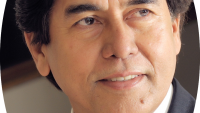
India’s Annexation of Kashmir Is No Surprise

Ambassador Jamil Khan
Cynthia McKinney, Ph.D.
Flag of Indian Autonomous Region of Jammu and Kashmir

You may also Download “India’s Annexation of Kashmir Is No Surprise” by clicking below.

August 10, 2019

India’s Annexation of Kashmir Is No Surprise

Is Modi Setting Up South Asia for Chaos?

Ill winds are blowing in South Asia and by the time they settle down, an entirely new political landscape could be in full view.  India’s annexation of Jammu and Kashmir is only the latest in a series of Modi moves that demonstrate that change is in the air.

India’s annexation of Jammu and Kashmir comes as no surprise and, quite frankly, is in keeping with India’s behavior after the British Colonial period ended in 1947, when the so-called “Princely States,” semi-autonomous regions within “British India,” were given the choice of acceding to the newly-created state of Pakistan or the newly-independent state of India.  “British India” consisted of today’s countries of Pakistan, Kashmir, India, Bangladesh, and Myanmar.  Afghanistan, Nepal, and Bhutan remained untouched by the British or any other Western European colonial powers.  Jammu and Kashmir was only one of many “Princely States” whose future was not decided at that time of the British exit as colonial master:  the fates of Nagaland, Assam, Manipur, and Sikkim—all eventually incorporated into the Republic of India—were presages of what was to come for Jammu and Kashmir.  The state of India took these actions without regard to the feelings of the local people and as a result, had to fend off secessionist movements that have only just now begun to subside.  The difference between these areas and Jammu and Kashmir is that the Muslim majority Jammu and Kashmir had the support of Pakistan at the United Nations and other international forums.  Thus, Modi’s India has struck a match to the kindling that was always Jammu and Kashmir.  The problem for India is that it has smoldering fires already lit on several other fronts.  The problem for the region is that this is not the only fire now burning.  First, Modi’s India’s smoldering fires.

Narendra Modi came to power as a “genocidaire:”  someone who has in the past incited genocide.  In February 2002, a train caught fire carrying Hindu pilgrims in India’s state of Gujarat.  Modi, Chief Minister of the state at the time, blamed the Pakistanis; a pogrom ensued with hundreds of Muslims dying and over 200,000 Muslims losing their homes.  Culprits committing horrendous acts against Muslim Gujaratis claimed that Modi told the police to stand down for three days while the rampage continued.  Babu Gajrangi, one of the conspirators, admits that Modi toured the Hindu areas and told him, “Well done.”  Gajrangi further states that Modi arranged to get him out of jail.  The New York Times “Timeline” of the incident states that “a top state official” who was later murdered stated that Modi ordered officials to take no actions against the perpetrators, resulting in thousands of cases being dropped despite eyewitnesses.  Paving his way to the Prime Minister’s office, in 2012, Modi’s chief assistant was charged and convicted and is currently serving a 28-year sentence in prison.  In all, 31 were convicted of murder.  Despite encouraging his subordinates to genocide, Modi escaped all charges.  Unfortunately, Modi has done nothing to stop the religious violence since he became Prime Minister.

In addition to the direct violence taking place between Hindus and Muslims in India—which is supposed to be a secular state according to its Constitution—Muslims are being subjected to new laws that affect their right to practice their religion and to live, according to the 2019 Report of the United States Commission on International Religious Freedom.  The Report specifically mentions forced conversions, cow slaughter laws, and vigilante groups.  Moreover, Muslims in Modi’s India, just like the Muslims in Myanmar, are being asked to prove their citizenship for India’s new National Register of Citizens (NRC).  President of Modi’s Hindu Nationalist Bharatiya Janata Party (BJP) and Member of Parliament Amit Shah stated that India is now ready to accept Hindu refugees from any country and give them Indian citizenship even if they are not included on the Citizenship Registry.  Further, the Citizenship Amendment Bill of 2019 which was introduced into parliament in January 2019, stated that Hindus, Buddhists, Jains, Sikhs, Parsis, and Christians from Afghanistan, Pakistan, and Bangladesh would be accepted into Indian citizenship.  If this sounds eerily familiar, it should.  It is the existing policy of Israel to accept any Jew from anywhere as a citizen of Israel and the U.S. taxpayers, through a line item in the annual State Department authorization bill, pay for Jewish resettlement to Israel.

It should not come as a surprise, then, that Modi’s India has partnered with Israel and the U.S.A. in an unprecedented scale compared to its past.  India, a co-founder of the Non-Aligned Movement and trusted Russian ally, has reversed its positions under Prime Minister Narendra Modi, even refusing to support Palestine at the United Nations and cementing its relationship with Israel with arms deals, agricultural programs, and cultural exchanges.  India has also signed three important agreements with the Pentagon, upgrading its military relationship with the U.S.  Narendra Modi could prove to be as destabilizing for South Asia as U.S. President Donald Trump has been in the global arena.  Additionally, the Trump Administration has named India its “Major Strategic Partner” in the “Indo-Pacific,” defined by the Trump Administration as the area starting in Western India extending to the West Coast of the U.S.  No wonder ISIS—just another one of the many U.S.-manufactured terrorist outfits—is turning its attention away from West Asia and toward India.

By providing a major grievance for the Muslim majority population of Jammu and Kashmir, and all of the Constitution-minded Indians of every faith, Modi’s India, with its more than 184 million Muslims, and new partnerships with the U.S. and Israel could be in for more than it bargained for.  After all, Pakistanis have little to show for their generations of loyalty to the U.S.  This explains why Pakistan, under its new Prime Minister, Imran Khan, is now looking to all of its neighbors in the region for peaceful solutions to the region’s problems.  Without a steady hand for peace in India, and with even deeper penetration of the region by the U.S. and Israel, “The Great Game” of U.S. geostrategy shifts to South Asia.  Thus, we believe that the U.S. “Pivot to Asia” is a pivot to South Asia—and that could have dire consequences for the entire Continent.

It is perceived in most Muslim majority countries that the new covert strategy of this India-U.S.-Israel nexus is aimed at neutralizing the only Muslim-majority nuclear state—Pakistan—through various diplomatic and non- diplomatic scenarios, with the possibility of full-blown military action.  After all, in 1971, India and Israel joined to Balkanize Pakistan and create the Muslim-majority state of Bangladesh.  Overt attempts to Balkanize Pakistan once again, by dismembering Baluchistan, seem to be at the top of India’s agenda, although Pakistan appears to have taken strong counter measures to prevent such an outcome.

By annulling Articles 370 and 35A of the Indian Constitution, India has annexed Jammu and Kashmir and now non-Kashmiris are allowed to move into Kashmir, buy property, obtain state employment, and live there.  Modi’s India has set the stage for large-scale ethnic cleansing or worse.  Moreover, to arrive at these conditions, India has quite possibly disregarded international law, including the United Nations Charter and Article 49 of the Geneva Convention, pertaining to protections of civilian populations.

Depriving Kashmiris of their inherent special status rights granted during pre- and post-partition of India will, undoubtedly, encourage an even more massive military deployment by India—which has already begun.  Kashmiris, who have fought for their independence for generations, are not about to forego their right to self-determination.  Kashmiri leaders have already started giving distress calls to the world community, especially to Muslim states, to protect them from the human rights violations that are sure to come.  We believe that Modi, who has already presided over one genocide, is fully prepared to preside over another.  In such an atmosphere, it is clear that Modi’s India, with its ascendant Hindu Nationalist ideology—HINDUTVA—will spur underground movements, not only in Kashmir, but also in the entirety of the country.  Unless Modi’s India immediately returns to a semblance of secularism, India could very well spin out of control.

As for the region, Bangladesh, on the other side of India, is playing host to one million Muslim Rohingya who fled persecution in majority-Buddhist Myanmar.  And Myanmar is engulfed in internal, low-intensity warfare from its own 135 ethnic groups trying to build self-determination in a post-colonial setting and within the idea of a single nation.

We encourage responsible actors in the international community to stop this deadly spin before it’s too late.

Retired Ambassador Jamil Khan served the Islamic Republic of Pakistan as Ambassador to Libya, United Arab Emirates, and served the United Nations for almost a decade.  Cynthia McKinney, Ph.D. served in the United States Congress for more than a decade, ran for President under the Green Party banner in 2008.

(AmbassadorJamilKhan@yahoo.com)

(HQ2600@gmail.com)